Tag: Unboxing

  • Baracuda Manta Gaming Mouse

    Baracuda Manta Gaming Mouse

    Gaming mice can get expensive very quickly. But what happens when you go completely in the opposite direction?

    The Baracuda Manta is a wired RGB gaming mouse that sits firmly in the budget category, but on paper it comes with features normally associated with much more expensive gaming mice. You get an optical sensor capable of up to 12,800 DPI, 8 buttons, 1000 Hz polling, RGB lighting and software support, all packed into an 81 g mouse.

    I’ve now been using the Manta for around three weeks, not only for gaming but also as my everyday mouse for work and writing. And surprisingly, I actually like it.
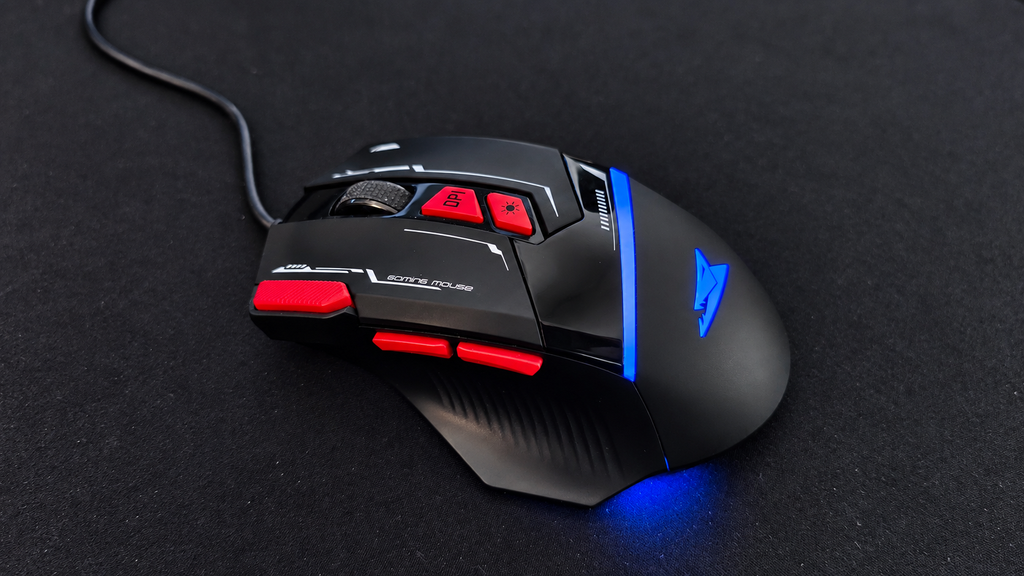

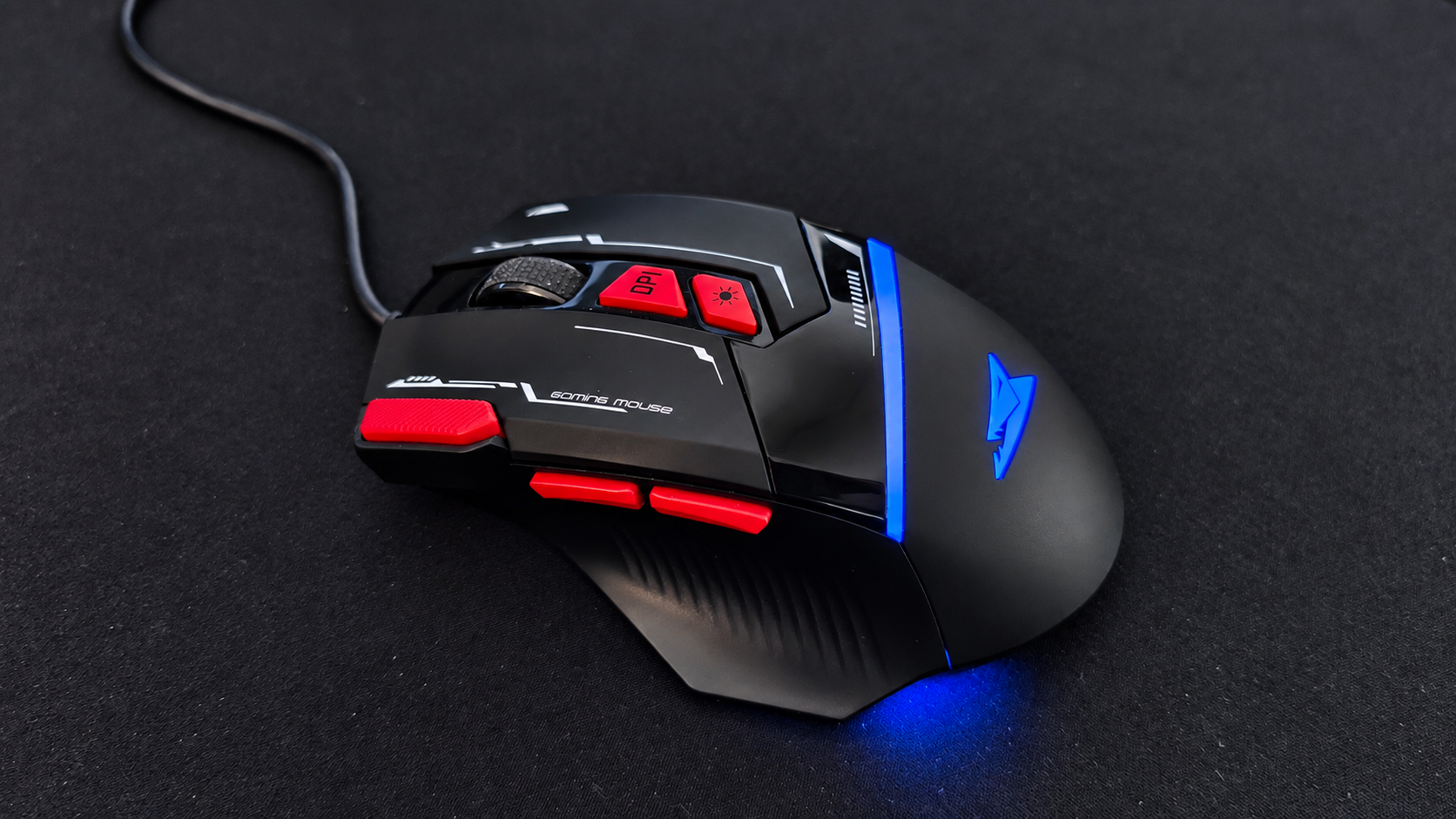
    The Manta is very clearly trying to be a gaming mouse. It has the aggressive shape, plenty of buttons, adjustable DPI and, of course, a healthy amount of RGB lighting. But I’ve actually ended up using it much more as an everyday mouse than purely as a gaming peripheral.

    That’s probably the more interesting test anyway.

    It’s easy to make a cheap mouse look good on a specification sheet. The question is whether you still want to use it after a few weeks.


    For something this inexpensive, the specification list is surprisingly long.

    • Optical Instant 825 sensor
    • Up to 12,800 DPI
    • 8 buttons
    • 1000 Hz polling rate
    • Up to 20 G acceleration
    • RGB lighting with 16.8 million colours
    • Software support
    • USB 2.0 wired connection
    • 1.5 m cable
    • 81 g
    • 126 × 82 × 42 mm
    • Rated for more than 5 million clicks
    • Windows and macOS support

    As always, numbers don’t tell you everything.

    After three weeks, the shape and button placement have mattered much more to me than the maximum DPI number.
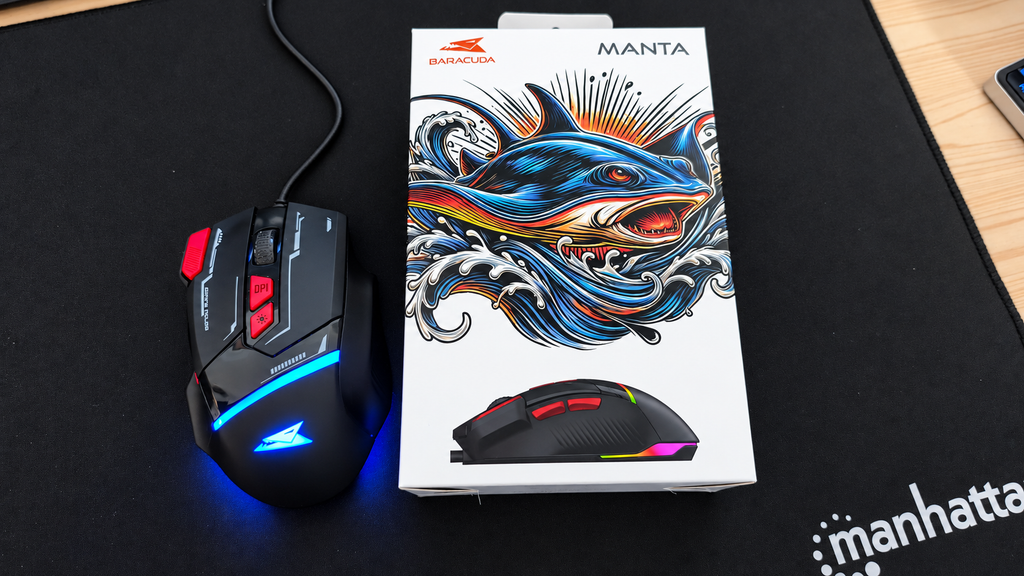

    The packaging is straightforward. Take the mouse out, connect the USB cable and you’re basically ready to go. That’s still one thing I like about simple wired peripherals. There is no battery to charge. No Bluetooth pairing. No wireless receiver to lose.

    Plug it in, the RGB comes alive, and start using it.


    This is probably one of the most important things to know about the Manta:

    It’s quite a large mouse. For me, that works well. I find the shape comfortable and after several weeks of use I haven’t had any problems using it for longer periods. But if you have smaller hands, I could definitely see the Manta feeling too big.

    So this isn’t necessarily a mouse I would recommend buying purely from the specification sheet without considering its size. The overall design is also something I genuinely like. It has that unmistakable gaming-mouse appearance without going completely overboard.
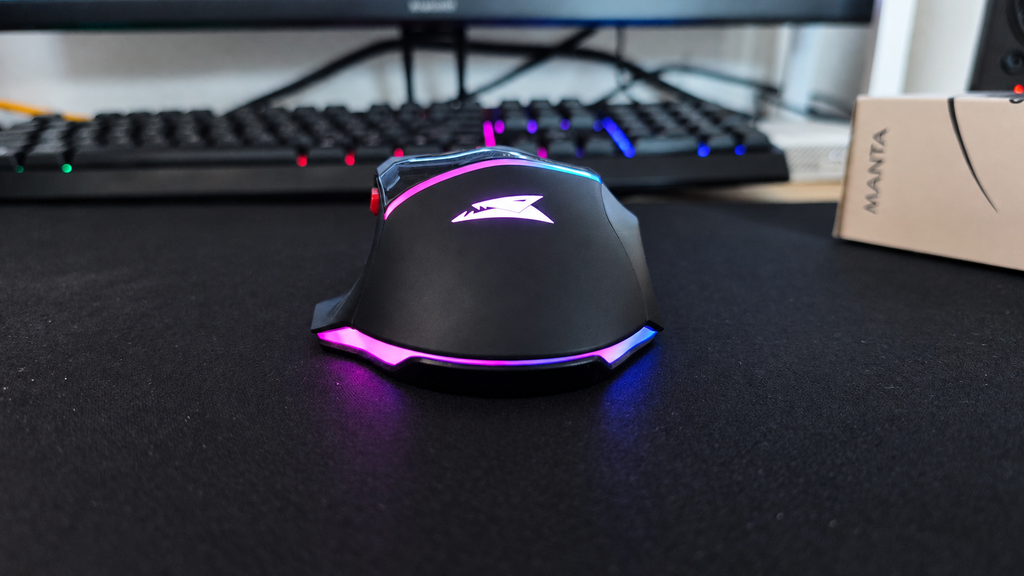
    And then there is the RGB. The lighting is easily one of my favourite parts of the Manta. It looks much better in person than I expected from such an inexpensive mouse and gives it considerably more personality when sitting on the desk.

    The cable is also perfectly acceptable for the price. It doesn’t feel especially premium and it isn’t something I would point to as a standout feature, but it also hasn’t given me any problems during normal use.

    In other words: it’s fine, but nothing to brag about.


    At around 81 grams, the Manta isn’t particularly heavy. At the same time, I wouldn’t describe it as an ultra-light gaming mouse either. It sits somewhere in the middle.For normal desktop use and the kind of games I play, that has been perfectly fine.

    If you’re heavily into competitive multiplayer games and specifically want the lightest mouse possible, you’ll probably be looking at a completely different category of product anyway.

    For my use, the weight hasn’t bothered me.


    This is where the Manta has actually surprised me the most.

    The two side buttons are positioned well and I’ve ended up using them a lot while working. They’re easy to reach without having to awkwardly change my grip, and after a few weeks they’ve become part of my normal workflow. There’s also an additional button next to the main left mouse button. I initially thought of it mostly as another gaming feature, but I’ve found it surprisingly useful when I’m doing a lot of text work and repeatedly working with copied text.

    These extra buttons have probably been more useful to me while working than while gaming.
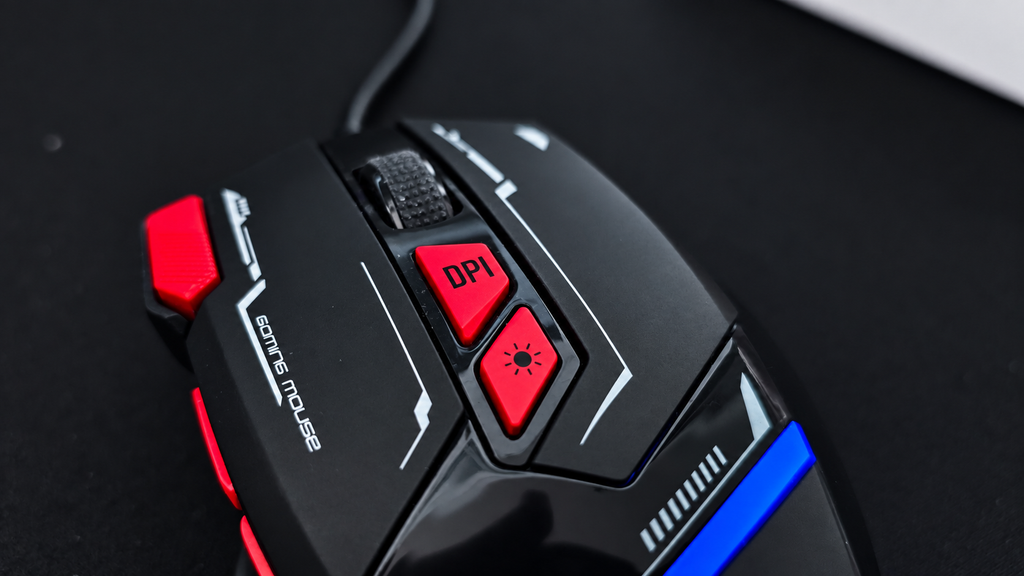
    The DPI button is also conveniently positioned and lets you quickly switch sensitivity. If you play a lot of competitive or multiplayer games, being able to change DPI quickly could be genuinely useful. For me personally, it isn’t particularly important because I don’t really play multiplayer games.

    Still, it’s nice to have.


    The buttons themselves feel good enough for everyday use.

    After several weeks I haven’t noticed anything that would make me want to stop using the mouse. The scroll wheel, on the other hand, is probably one of the least exciting parts of the Manta. It’s fine. It works. But that’s about it.

    I would describe it as average rather than particularly good or bad.

    Considering the price of the mouse, though, that’s not exactly a major complaint.


    Baracuda also provides software for the Manta, which should allow additional configuration of the mouse. Unfortunately, this is one part I haven’t been able to properly test yet. On most of my LAB computers I run Linux, but software is only supported for Windows.

    So I’m not going to judge the software without any test,beacuse for this review, I’ve mainly been using the mouse as it works out of the box.

    And honestly, even without touching the software, I’ve been perfectly happy using it.


    This is where the Manta has done better than I originally expected. I’ve been using it for roughly three weeks now for normal desktop work, writing and some gaming, and I haven’t felt the need to replace it. That’s probably one of the best things I can say about a cheap peripheral.

    The large shape works well for my hands. The side buttons are genuinely useful. The extra button has found its place in my normal work routine. The RGB looks great. The cable is good enough for normal use. And despite clearly being a budget product, nothing about it has made me want to immediately go back to another mouse.

    There are better mice. There are lighter mice. There are certainly more premium mice.

    But the Manta has been completely usable as an everyday mouse.


    After around three weeks with the Baracuda Manta, I like it more than I expected to. Its biggest consideration is probably its size. If you have larger hands, the shape can be very comfortable. If your hands are smaller, I would be a little more careful because this is definitely not a compact mouse.

    The RGB looks great, the button placement is genuinely useful and the mouse has worked just as well for everyday productivity as it has for casual gaming. The scroll wheel is average, the cable is nothing special and I haven’t been able to test the software yet.

    But that’s also missing the point. This is a very inexpensive gaming mouse. And after three weeks, I’m still happily using it every day.

    For a budget peripheral, that’s a pretty successful result.
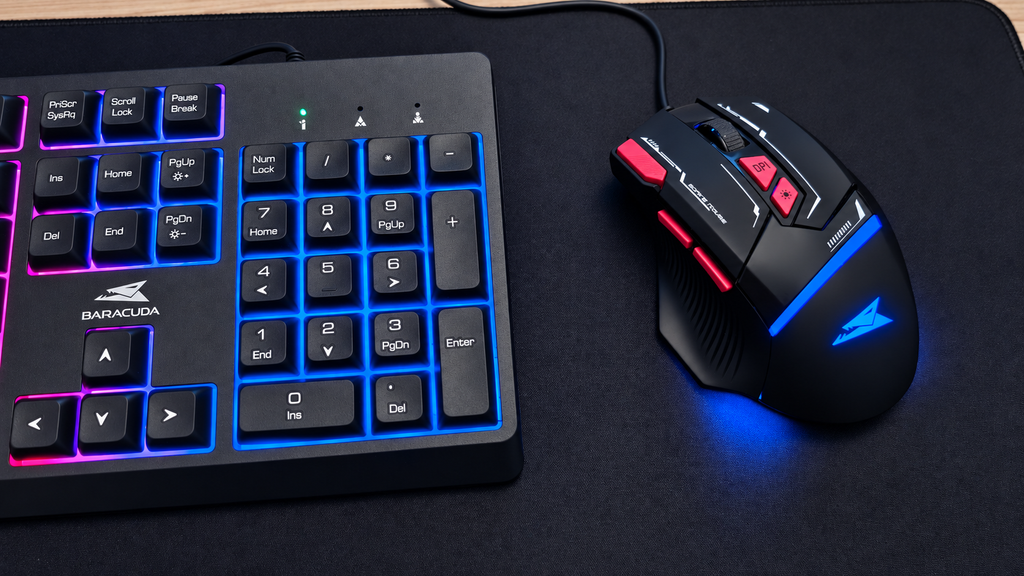
    Spoiler: the keyboard isn’t here by accident.


  • Xiaomi Redmi 15C 5G – Unboxing & First Impressions

    Xiaomi Redmi 15C 5G – Unboxing & First Impressions

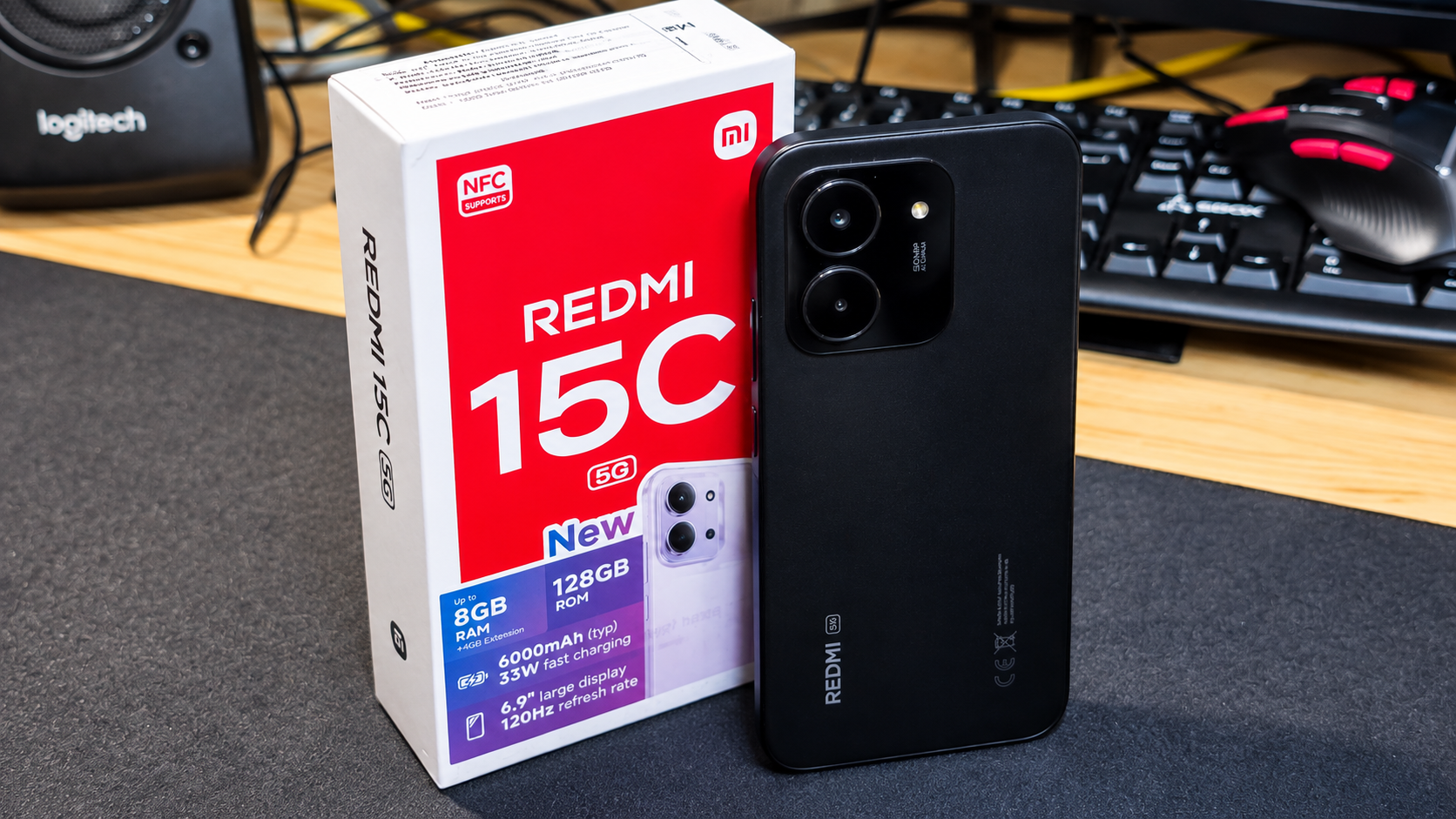
    The Redmi 15C 5G is an affordable Android phone with a large display, 5G connectivity and a massive battery. I picked one up not only to see what Xiaomi offers at the budget end in 2026, but also with a future OpenBootLab project in mind.

    Before the experiments begin, let’s unbox it and take a first look.


    The interesting part here is that this wasn’t originally supposed to be a normal smartphone purchase.

    After experimenting with running Linux on my Redmi A3, I decided that I wanted to take the idea further and build a phone-powered cyberdeck. The A3 proved that the basic concept worked, but for the final project I wanted something newer and more capable.

    The Redmi 15C 5G looked like an interesting candidate: it’s still a relatively inexpensive Android phone, but gives me a more modern platform to experiment with.

    And before I start doing strange things to it, I thought it deserved a proper unboxing.


    The unboxing experience is pretty straightforward. For the European market, there is no power adapter included in the box. You do get a USB-A to USB-C charging cable, documentation and the usual SIM eject tool.

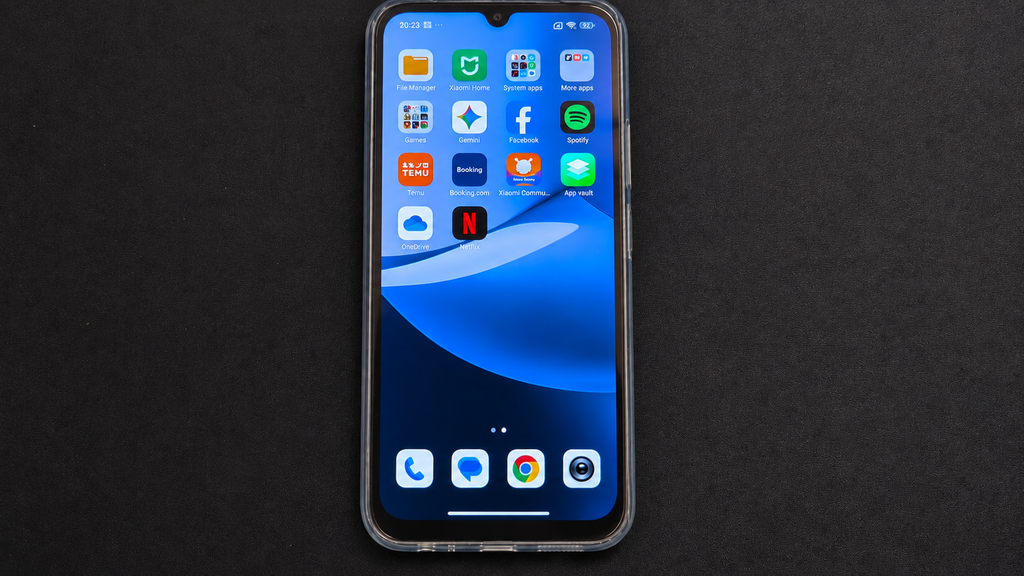
    One nice addition is the included clear TPU case. It feels surprisingly good quality for a case bundled with a budget phone and fits the device well. It’s nothing fancy, but it means the phone is protected straight out of the box without needing to buy a case separately.

    In the video below, you can see the full unboxing, first boot and a quick look around Xiaomi HyperOS.


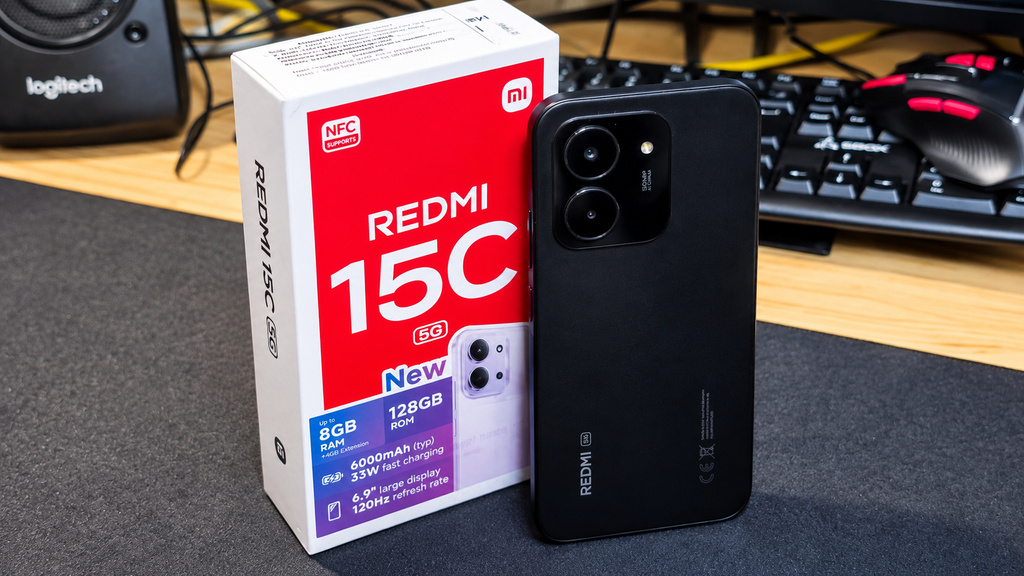
    The Redmi 15C 5G is a large phone, and you notice that immediately when you pick it up. Despite its budget price, though, it doesn’t feel particularly cheap in the hand. The plastic construction feels solid, and the overall design is clean and modern.

    The camera module on the back gives the phone a slightly more premium appearance than I expected at this price point. Xiaomi has kept the rest of the design fairly simple, which I actually like.

    Another welcome feature is the 3.5 mm headphone jack. It’s becoming increasingly uncommon on modern smartphones, so it’s nice to see Xiaomi keeping it on an affordable device like this. You can simply plug in a pair of wired headphones without needing an adapter or USB-C headphones.

    Of course, the size won’t be for everyone. This is definitely not a compact smartphone, but the large body also makes sense considering the big display and battery inside.

    Overall, my first impression of the build quality is positive. It still feels like a budget device, but not an unnecessarily cheap one.


    The Redmi 15C 5G comes with a large 6.9-inch display with a refresh rate of up to 120 Hz. The size is immediately noticeable, and for browsing, watching videos or simply navigating around Android, there’s plenty of screen space to work with. The bezels are still quite large, especially compared to more expensive modern smartphones, and there’s a noticeable chin at the bottom. At this price point, though, that’s difficult to complain about too much — some compromises have to be made to keep the price down.

    The display itself isn’t anything particularly premium, but for normal everyday use my first impression is that it does the job well. The higher refresh rate also helps make navigating through the interface feel smoother.

    The phone runs Xiaomi HyperOS, which felt responsive enough during my initial setup and short time navigating through the menus.

    One thing I wasn’t particularly impressed by was the amount of pre-installed software. There are already quite a few additional apps and games on the phone out of the box. Even during the initial setup, you’re presented with an option to install more supposedly “essential” apps, many of which are basically games.

    Most of this can be removed or simply skipped during setup, but it does make the initial experience feel unnecessarily cluttered. It’s something I’ve come to expect to some degree from inexpensive Android phones, but I’d still prefer a much cleaner installation from the start.

    I’ll need considerably more time with HyperOS on this hardware before making any conclusions about performance. And considering what I actually bought the Redmi 15C 5G for, stock Android usage is only the beginning.


    Inside, the Redmi 15C 5G is powered by the MediaTek Dimensity 6300, which also brings 5G connectivity to the device. My version comes with 128 GB of storage, with the box advertising up to 8 GB of RAM using memory extension.

    So far, performance feels perfectly adequate for what this phone is supposed to be. Navigating through HyperOS, opening apps and going through the initial setup hasn’t shown any major issues, although this is obviously far from a proper performance test.

    One of the bigger highlights is the 6000 mAh battery, paired with support for 33 W fast charging. For an inexpensive phone, having such a large battery is definitely appealing, although I’ll need to actually use the phone for a while before commenting on real-world battery life.

    You also get 5G and NFC, which makes the 15C considerably more interesting as an inexpensive everyday device — and also gives me a better platform for the experiments I have planned.

    I’m not going to run benchmarks or make any serious performance claims yet. This is only a first look, and there will be plenty of opportunities to push the hardware harder later.


    The Redmi 15C 5G features a 50 MP main camera, but I haven’t spent enough time with it yet to give it a proper evaluation.

    During my first look, I only briefly opened the camera and explored the interface. I haven’t taken enough photos in different conditions to make any meaningful conclusions about image quality.

    For now, I’ll leave the camera testing for a future post after I’ve actually spent some time using the phone.


    My first impressions of the Redmi 15C 5G are mostly positive. It’s obviously a budget phone and there are compromises, such as the large display bezels and the amount of pre-installed software, but the phone itself feels solid, HyperOS runs smoothly enough so far, and features such as 5G, NFC, a 6000 mAh battery and the 3.5 mm headphone jack make it an interesting package for the price.

    But simply using it as a normal Android phone isn’t really why I bought it.

    The Redmi 15C 5G will become part of several upcoming OpenBootLab experiments. First, I want to pair it with the Rii Bluetooth mini keyboard I’ve recently picked up and see how practical the combination actually is.

    After that, things get more interesting. I’ll be experimenting with running Linux on the Redmi 15C 5G, building on what I previously tried with the Redmi A3.

    Eventually, the phone is planned to become the heart of my Android Cyberdeck project, where the goal is to turn an inexpensive smartphone into something closer to a tiny portable computer.

    So this isn’t really the conclusion for the Redmi 15C 5G.

    It’s just the first boot.