REVIEW 003 // BUDGET PHONE // ANDROID // XIAOMI // 5G
SEPTEMBER 2026
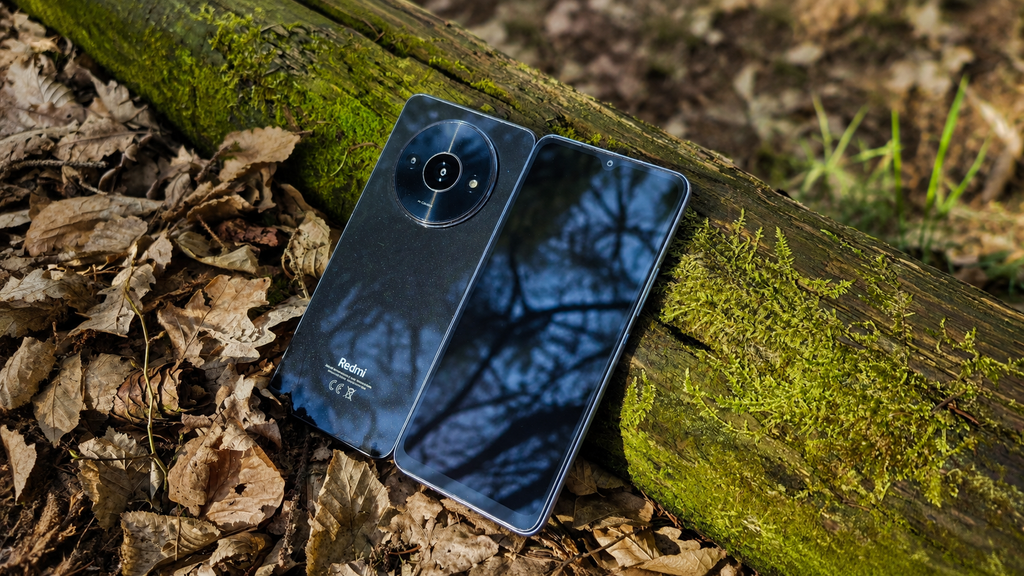
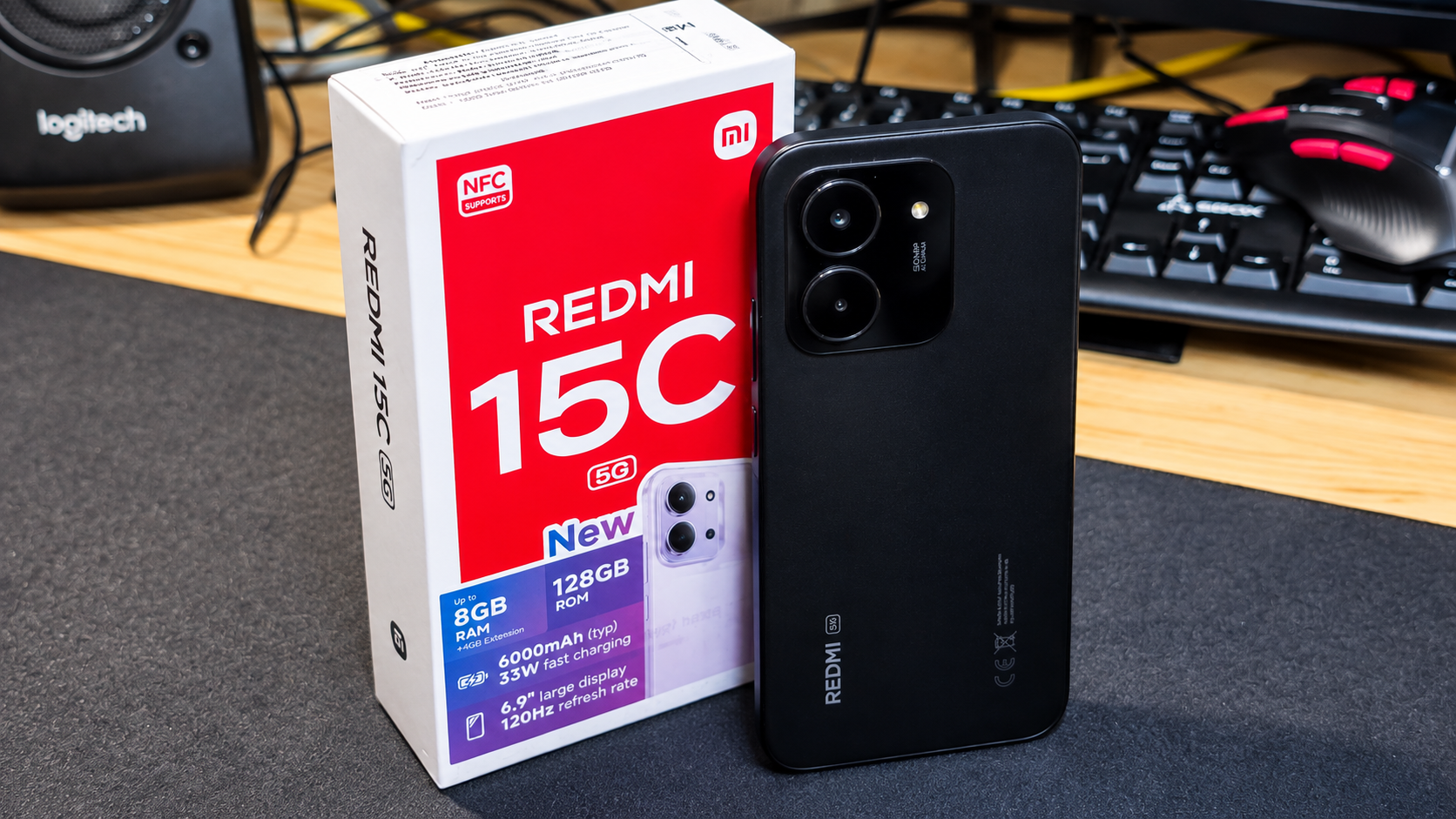
The Redmi 15C 5G is an affordable Android phone with a large display, 5G connectivity and a massive battery. I picked one up not only to see what Xiaomi offers at the budget end in 2026, but also with a future OpenBootLab project in mind.
Before the experiments begin, let’s unbox it and take a first look.
01 // WHY THE REDMI 15C 5G?
The interesting part here is that this wasn’t originally supposed to be a normal smartphone purchase.
After experimenting with running Linux on my Redmi A3, I decided that I wanted to take the idea further and build a phone-powered cyberdeck. The A3 proved that the basic concept worked, but for the final project I wanted something newer and more capable.
The Redmi 15C 5G looked like an interesting candidate: it’s still a relatively inexpensive Android phone, but gives me a more modern platform to experiment with.
And before I start doing strange things to it, I thought it deserved a proper unboxing.
02 // UNBOXING
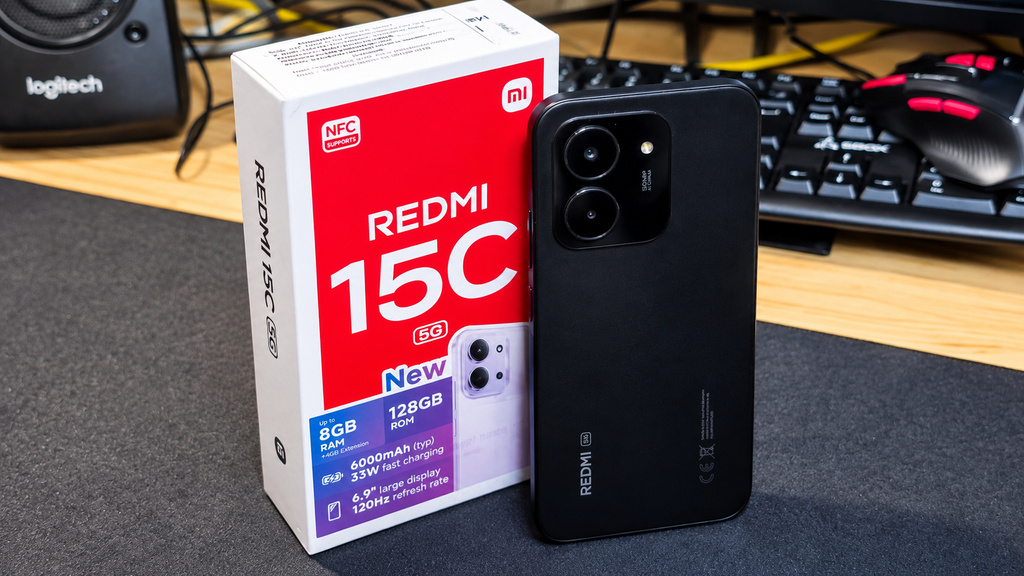
The unboxing experience is pretty straightforward. For the European market, there is no power adapter included in the box. You do get a USB-A to USB-C charging cable, documentation and the usual SIM eject tool.
One nice addition is the included clear TPU case. It feels surprisingly good quality for a case bundled with a budget phone and fits the device well. It’s nothing fancy, but it means the phone is protected straight out of the box without needing to buy a case separately.
In the video below, you can see the full unboxing, first boot and a quick look around Xiaomi HyperOS.
03 // BUILD & DESIGN
The Redmi 15C 5G is a large phone, and you notice that immediately when you pick it up. Despite its budget price, though, it doesn’t feel particularly cheap in the hand. The plastic construction feels solid, and the overall design is clean and modern.
The camera module on the back gives the phone a slightly more premium appearance than I expected at this price point. Xiaomi has kept the rest of the design fairly simple, which I actually like.
Another welcome feature is the 3.5 mm headphone jack. It’s becoming increasingly uncommon on modern smartphones, so it’s nice to see Xiaomi keeping it on an affordable device like this. You can simply plug in a pair of wired headphones without needing an adapter or USB-C headphones.
Of course, the size won’t be for everyone. This is definitely not a compact smartphone, but the large body also makes sense considering the big display and battery inside.
Overall, my first impression of the build quality is positive. It still feels like a budget device, but not an unnecessarily cheap one.

04 // DISPLAY & HYPEROS
The Redmi 15C 5G comes with a large 6.9-inch display with a refresh rate of up to 120 Hz. The size is immediately noticeable, and for browsing, watching videos or simply navigating around Android, there’s plenty of screen space to work with. The bezels are still quite large, especially compared to more expensive modern smartphones, and there’s a noticeable chin at the bottom. At this price point, though, that’s difficult to complain about too much — some compromises have to be made to keep the price down.
The display itself isn’t anything particularly premium, but for normal everyday use my first impression is that it does the job well. The higher refresh rate also helps make navigating through the interface feel smoother.
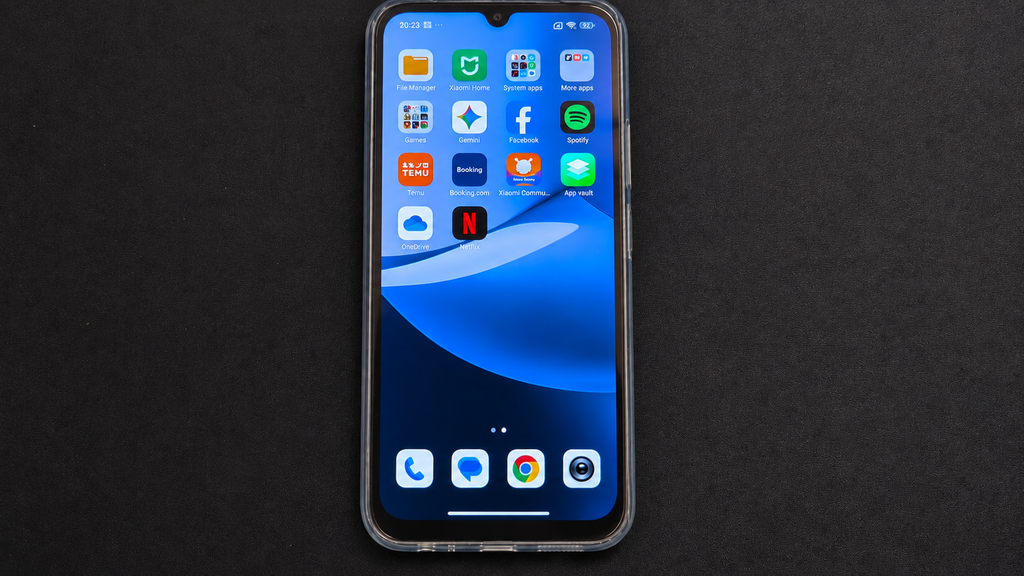
The phone runs Xiaomi HyperOS, which felt responsive enough during my initial setup and short time navigating through the menus.
One thing I wasn’t particularly impressed by was the amount of pre-installed software. There are already quite a few additional apps and games on the phone out of the box. Even during the initial setup, you’re presented with an option to install more supposedly “essential” apps, many of which are basically games.
Most of this can be removed or simply skipped during setup, but it does make the initial experience feel unnecessarily cluttered. It’s something I’ve come to expect to some degree from inexpensive Android phones, but I’d still prefer a much cleaner installation from the start.
I’ll need considerably more time with HyperOS on this hardware before making any conclusions about performance. And considering what I actually bought the Redmi 15C 5G for, stock Android usage is only the beginning.
05 // HARDWARE & PERFORMANCE
Inside, the Redmi 15C 5G is powered by the MediaTek Dimensity 6300, which also brings 5G connectivity to the device. My version comes with 128 GB of storage, with the box advertising up to 8 GB of RAM using memory extension.
So far, performance feels perfectly adequate for what this phone is supposed to be. Navigating through HyperOS, opening apps and going through the initial setup hasn’t shown any major issues, although this is obviously far from a proper performance test.
One of the bigger highlights is the 6000 mAh battery, paired with support for 33 W fast charging. For an inexpensive phone, having such a large battery is definitely appealing, although I’ll need to actually use the phone for a while before commenting on real-world battery life.
You also get 5G and NFC, which makes the 15C considerably more interesting as an inexpensive everyday device — and also gives me a better platform for the experiments I have planned.
I’m not going to run benchmarks or make any serious performance claims yet. This is only a first look, and there will be plenty of opportunities to push the hardware harder later.
06 // CAMERA
The Redmi 15C 5G features a 50 MP main camera, but I haven’t spent enough time with it yet to give it a proper evaluation.
During my first look, I only briefly opened the camera and explored the interface. I haven’t taken enough photos in different conditions to make any meaningful conclusions about image quality.
For now, I’ll leave the camera testing for a future post after I’ve actually spent some time using the phone.
07 // FIRST IMPRESSIONS & WHAT’S NEXT
My first impressions of the Redmi 15C 5G are mostly positive. It’s obviously a budget phone and there are compromises, such as the large display bezels and the amount of pre-installed software, but the phone itself feels solid, HyperOS runs smoothly enough so far, and features such as 5G, NFC, a 6000 mAh battery and the 3.5 mm headphone jack make it an interesting package for the price.
But simply using it as a normal Android phone isn’t really why I bought it.
The Redmi 15C 5G will become part of several upcoming OpenBootLab experiments. First, I want to pair it with the Rii Bluetooth mini keyboard I’ve recently picked up and see how practical the combination actually is.
After that, things get more interesting. I’ll be experimenting with running Linux on the Redmi 15C 5G, building on what I previously tried with the Redmi A3.
Eventually, the phone is planned to become the heart of my Android Cyberdeck project, where the goal is to turn an inexpensive smartphone into something closer to a tiny portable computer.
So this isn’t really the conclusion for the Redmi 15C 5G.
It’s just the first boot.
// END OF REVIEW 002